

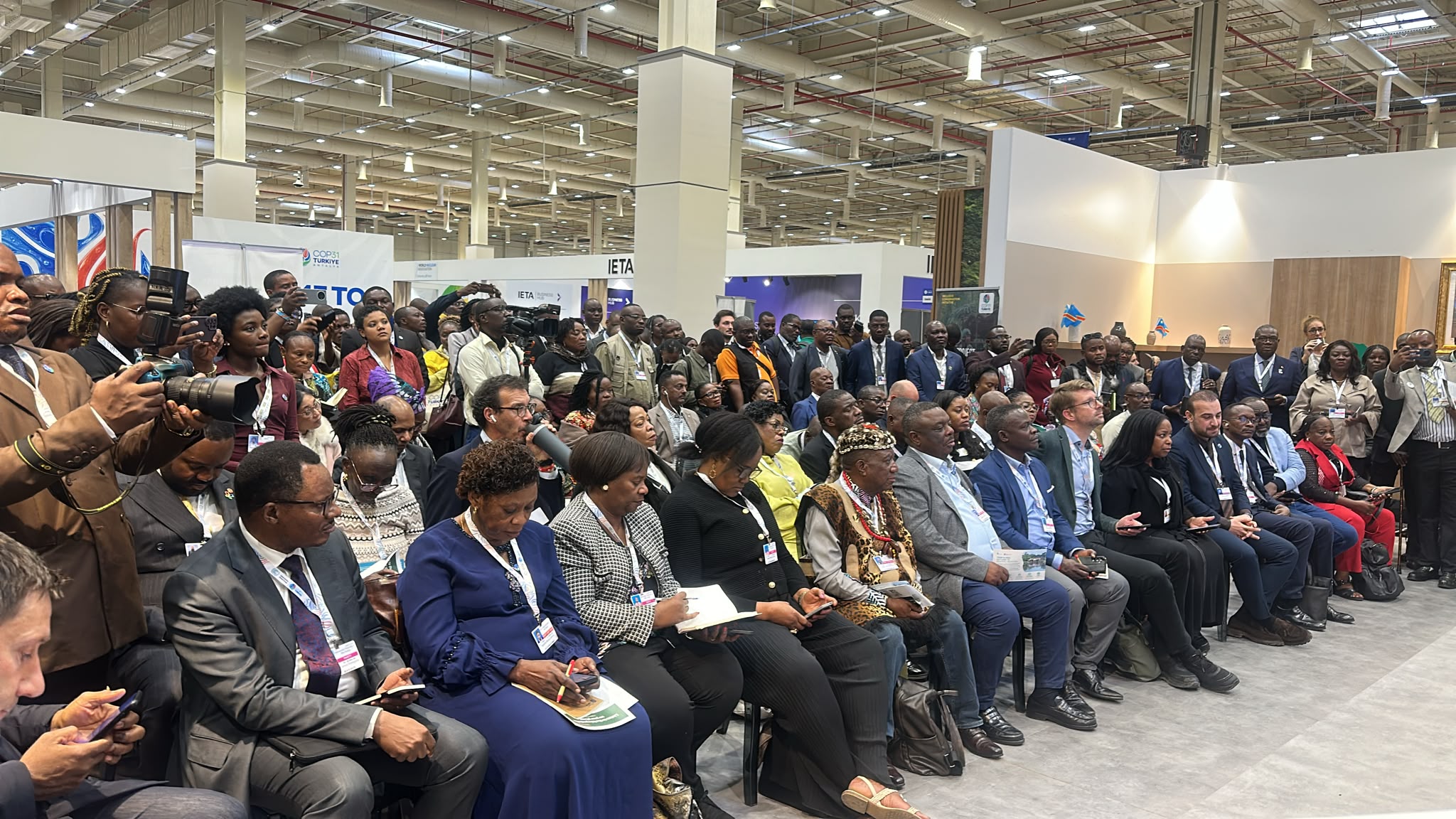
COP 31, Antalya, Turkiye,– 13 November – The Central African Forest Initiative (CAFI) and Rainforest Foundation Norway (RFN), in an event hosted by the Minister of Environment, Sustainable Development and New Climate Economy of the Democratic Republic of the Congo (MEDD- NDC, DRC) and the Congo basin Forest Partnership (CBFP) have just launched a new evidence paper, “From Global Outlook to regional response : Advancing the Congo Basin Forest Agenda’ calling for urgent and coordinated action to secure the future of the Congo Basin forests by 2030.
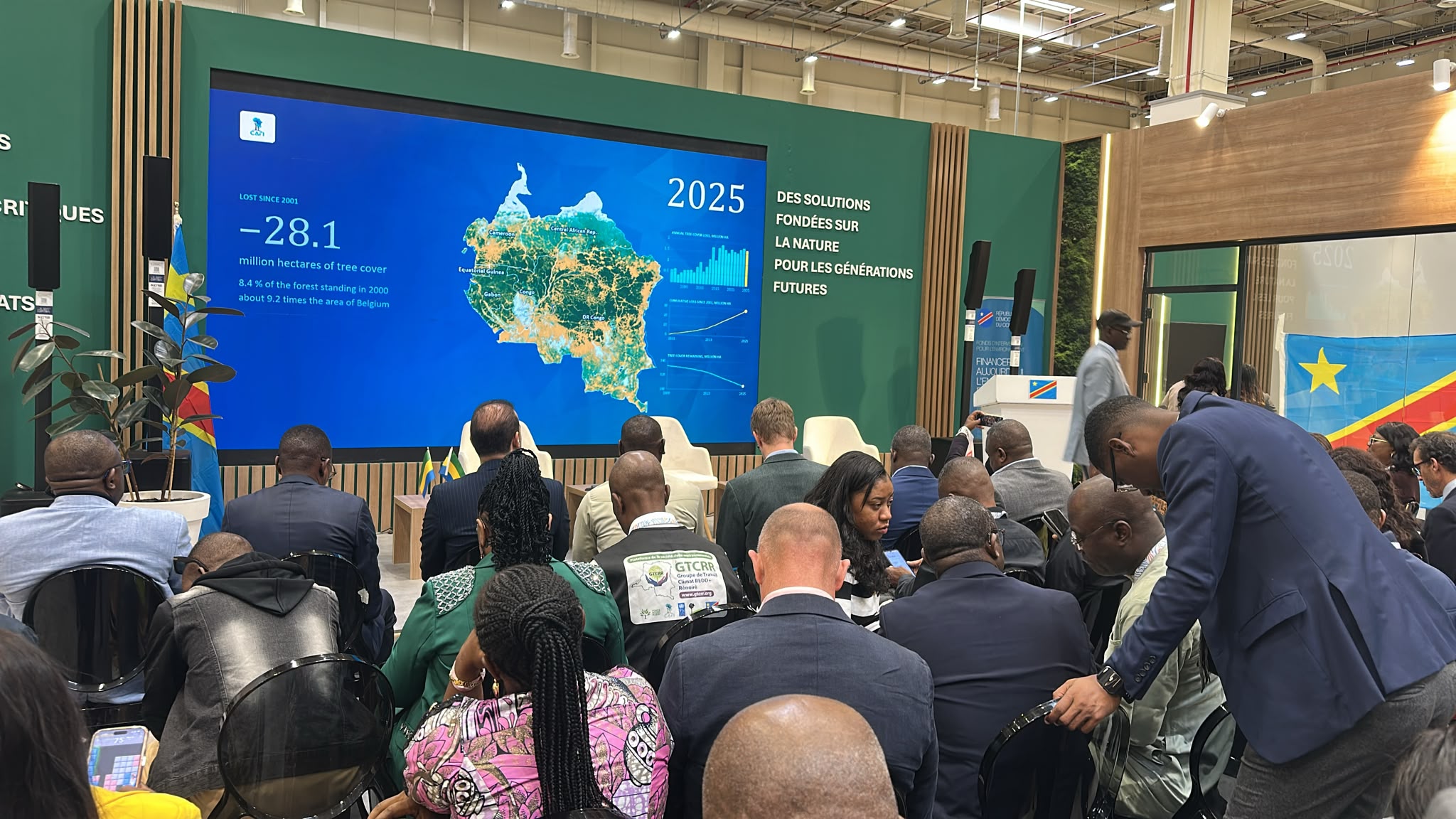
The report‘s analysis paints a nuanced picture of the Congo Basin. Despite increasing global pressure on tropical forests, the region remains the world’s last major tropical forest block that continues to function as a net carbon sink. Yet this status cannot be taken for granted.
The evidence highlights five critical findings.
- The Congo Basin has largely contained forest loss compared with other tropical forest regions, but annual forest loss remains significant, reaching 1.67 million hectares in 2025.
- Emissions resulting from forest loss have remained broadly unchanged for the past decade, demonstrating that progress in reducing underlying drivers remains limited.
- Deforestation is increasingly concentrated in a handful of hotspots, particularly in the Democratic Republic of the Congo, which accounts for more than three-quarters of forest loss in the Basin.
- The main pressures on forests continue to stem from rural poverty, unsustainable agricultural expansion and dependence on wood energy.
- A new wave of investment in mining, oil, transport corridors and other infrastructure could substantially increase pressure on forests if not carefully managed.
Despite these challenges, a credible pathway exists to maintain the Congo Basin as a global climate asset while supporting economic development and poverty reduction. The paper identifies five priorities for action by 2030: accelerating the transformation of rural economies, integrating forest and climate considerations into major investment decisions, scaling up sustainable agriculture and energy alternatives, strengthening governance and land-use planning, and ensuring that Indigenous Peoples and local communities receive a far greater share of climate and forest finance.
The message of this report is not one of inevitability, but of opportunity,” said HE Professor Marie Nyange Ndambo, Minister of Environment, Sustainable Development and New Climate Economy of the Democratic Republic of the Congo. “The Congo Basin still has a window to pursue a development pathway that reduces poverty, creates jobs and protects forests. What is needed now is action at the speed and scale that the evidence demands.”
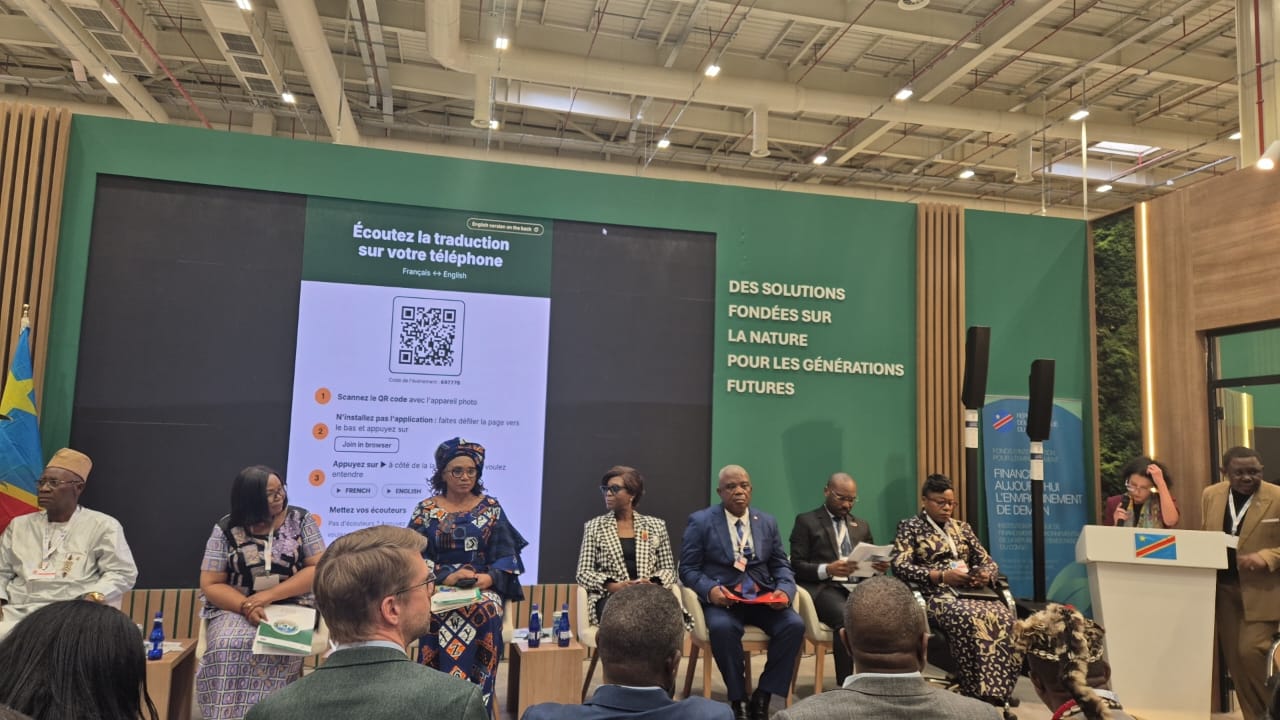
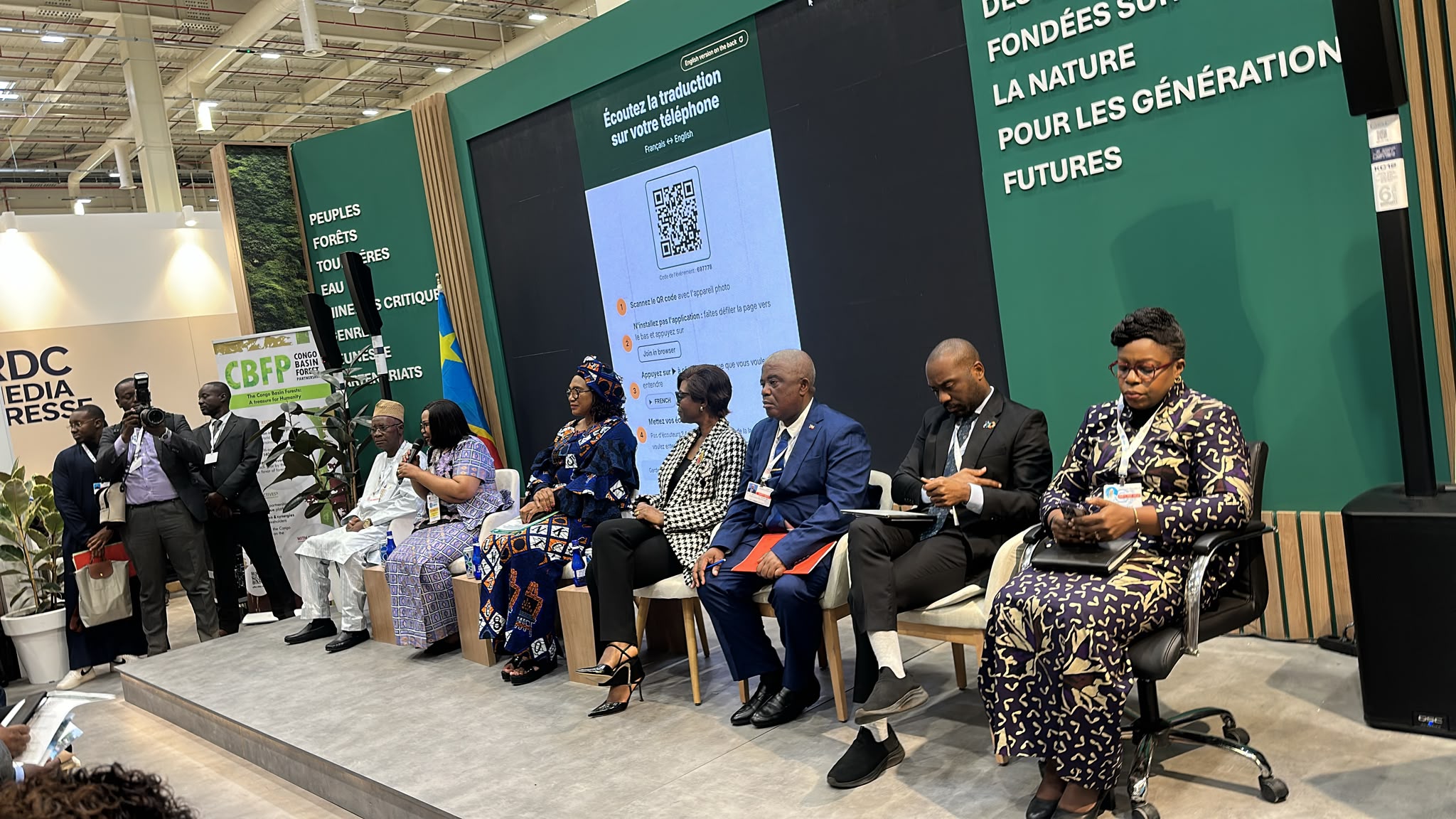
The high-level dialogue provided an opportunity for ministers from the DRC, Republic of the Congo, Gabon and the Central African Republic to discuss how these priorities translate into national responses in light of different circumstances:
- HEM Rosalie Matondo, Minister of Forest Economy, noted that Payments for Environmental services that started with restoring lost forest through afforestation and reforestation, were also relevant for conservation in the Republic of Congo.
- HEM Stephen Stanislas Mouba Onoula, Minister of Environment and Climate, spoked about turning decades of stewardship into sustained finance, with real-life social impact for citizens
- Minister Nyange Ndambo reflected on small-scale agriculture, and on the pride that Congo Basin countries should bear for regulating the global climate
- Prof. Silla Sembella., RCA Minister of Environment and Development, highlighted the first Payment for Environment project that recently started with CAFI support around Bangui and its area, helping with the fight against desertification threatening the country.
All emphasised the shared objective of ensuring that economic growth is compatible with preserving the forests that underpin regional prosperity and global climate stability.
Linking evidence to action, the event also showcased countries’ leadership to transform their rural economy through Payments for Environmental Services, rewarding local communities for results in sustainable agriculture and forest conservation. Notably, new national PES dashboards were launched at the event, allowing governments to track progress and payments made to individual and communities.
A recurring theme throughout the discussions was the importance of ensuring that climate finance reaches the people most directly responsible for protecting forests.
This is a clear call to action, there is still a window of opportunity to prevent the forest loss we have experienced in other tropical regions, declared Ingrid Tungen of Rainforest Foundation Norway. This means anticipating emerging threats, putting strong safeguards in place, and ensuring that Indigenous Peoples and local communities are at the heart of decisions about the forest.
The event closely followed the Forest leaders Summit of 11 November, during which DRC President Tshisekedi acknowledged CAFI and Norway support and called climate social justice for Indigenous peoples, women and youth.
 From Global Outlook to Regional Response: Advancing the Congo Basin Forest Agenda - RFN and CAFI
