

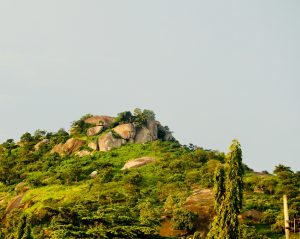
The Central African Republic’s dense humid forests are split into one massif in the southwest and the Bangassou forest in the East. They harbor exceptional biodiversity including 208 mammal species, 698 bird species, 25 reptiles and hundreds of tree species amongst which some are endangered or vulnerable. 45% of the population suffer from food insecurity, and 59% lives in conditions of intense deprivation.
Exploring options through policy dialogue and feasibility studies in a country that advances its REDD+ agenda despite instability & limited resources
Heavily impacted by politico-military crises, the Central African Republic is one of the poorest countries in the world, with economic and social development hampered by years of intermittent armed conflict. Deforestation and forest degradation, the main source of greenhouse gas emissions, remain relatively low with the exception of the outskirts of urban centres.
However, deforestation is increasing rapidly over time in the country. Indeed, CAR was the Central African country with the highest rate of undisturbed forest loss: between 2015 and 2020, this rate reaches 2.1%, well above its neighbours Cameroon (0.21%), Congo (0.71%) or the Democratic Republic of Congo (1.46%). Thus, CAR’s dense rainforests appear to be in a recent and intensifying phase of degradation[1].
In this pivotal period, the partnership with CAFI seeks to support the country’s recovery on a low-carbon sustainable development path. The CAR’s National Investment Framework (NIF) for REDD+, developed with CAFI’s financial support, emphasizes the need to adopt a more integrated approach to sustainably pull CAR out of the crisis.
Thus, the NIF advocates for the implementation of an approach that strengthens the central and deconcentrated administrations and local communities, while simultaneously implementing operational investments for the benefit of local actors. These can be replicated on a large scale, following the spatial progression of the reconciliation process.
[1] Vancutsem C., Achard F., Pekel J.-F., Vieilledent G., Carboni S., Simonetti D., Gallego J., Aragao L. et Nasi R., 2020. Long-term (1990-2019) monitoring of tropical moist forests dynamics. bioRxiv.
hectares of dense tropical forests
rank in 2020 Human Development Index, out of 193
%
of the population was in extreme poverty in 2020
%
of the population depends on fuelwood for energy
US $ of funding from CAFI through 4 grants
investments axes and 3 pilot territories
CAFI aims to support the Central African Republic at two levels:
- At the central level: in the implementation of major reforms that it has undertaken, notably on decentralization – a central element of the peace agreements, land use planning, land tenure, etc. – with a view to laying the foundations for the sustainable development of a country;
- At the local level: in a balanced development of territories that reconciles economic and social development with the preservation of forests and natural resources. Three initial territories have been identified: (i) Bangui and its periphery, where ecosystems are particularly threatened to meet the needs of the capital’s population, (ii) the complex of protected areas of Dzangua Sangha, Mbaere Bodingue Park, Ngotto forest, which includes forests with High Conservation Value and valuable natural resources (gold, diamonds, timber, etc.) and (iii) the Bangassou forest, which, being far away from the capital, is under significant pressure for the needs of vulnerable local populations.
 CAFI 2024 Annual Report